
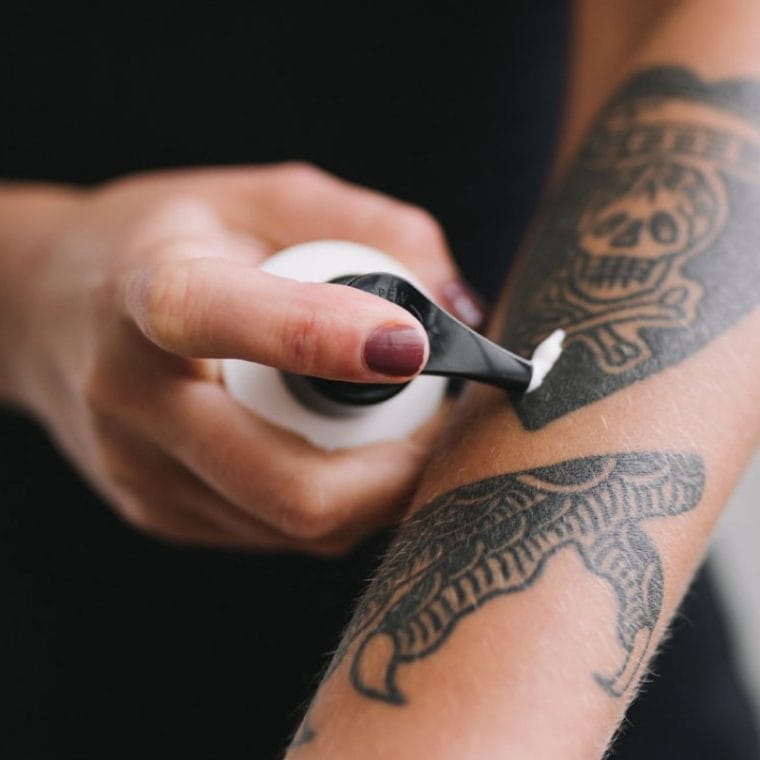

Tattoo styles and meanings are closely connected, but they are not the same thing. A tattoo style describes how an image is drawn and applied—its line weight, colour, shading, level of detail and composition. The meaning comes from the subject, the cultural context and the personal story of the wearer.
The same idea can look completely different as a fine-line tattoo, a realistic portrait, bold traditional work or an abstract blackwork composition. Understanding the main styles will help you explain your preferences, find the right artist and choose a design that works well on your body.
1. Realism Tattoos
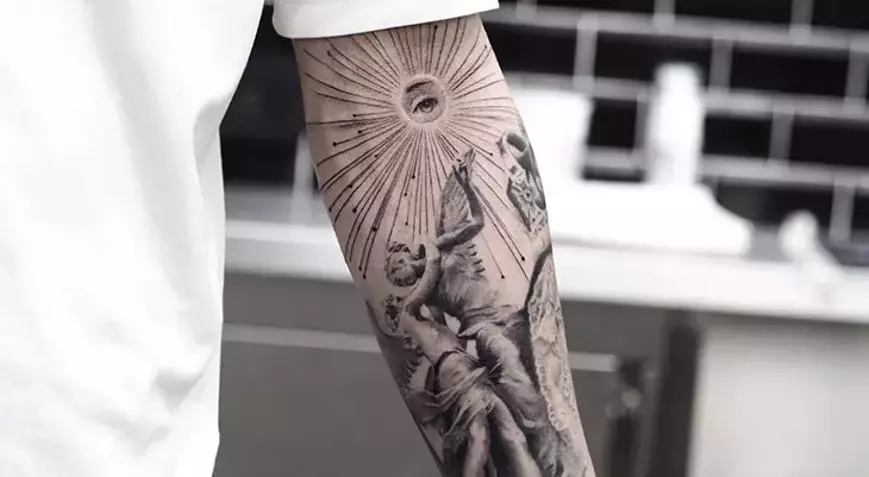
Realism aims to recreate the appearance of a photograph or real object through detailed shading, proportion and depth. Portraits, animals, flowers, landscapes and meaningful objects are common subjects. Realism may be created in black and grey or full colour.
The style itself does not carry one fixed meaning. A portrait might honour a family member, while an animal or landscape may represent a memory, place or personal connection. Realistic work usually needs sufficient size and a suitable placement to preserve important detail.
2. Fine-Line and Minimalist Tattoos
Fine-line tattoos use delicate lines to create subtle illustrations, florals, symbols or lettering. Minimalist tattoos reduce an idea to its simplest recognisable form. The two approaches often overlap, although not every fine-line tattoo is small and not every minimalist design uses extremely thin lines.
These styles suit clients who prefer a quiet, refined appearance. Small size should be planned carefully: enough spacing is needed so lines and details remain readable as the tattoo settles and ages.
3. Geometric and Mandala Tattoos
Geometric tattoos use shapes, repetition, symmetry and measured spacing. They may be purely abstract or combined with animals, flowers and natural forms. Mandala-inspired designs often use a central point and repeated circular structure to create visual balance.
People may personally associate these designs with order, balance or focus, but geometric forms do not have one universal meaning. Some symbols belong to specific spiritual or cultural traditions, so their origin and context should be researched before they are used.
4. Blackwork Tattoos
Blackwork is a broad category based primarily on the use of black ink. It can include bold graphic shapes, ornamental work, abstract compositions, illustrative designs, negative space and areas of solid black.
Because blackwork covers many different approaches, it does not automatically represent strength, darkness or any other single idea. Its meaning depends on the imagery and the wearer. Strong contrast can make it effective for both small graphic pieces and larger body-flowing compositions.
5. Traditional Tattoos
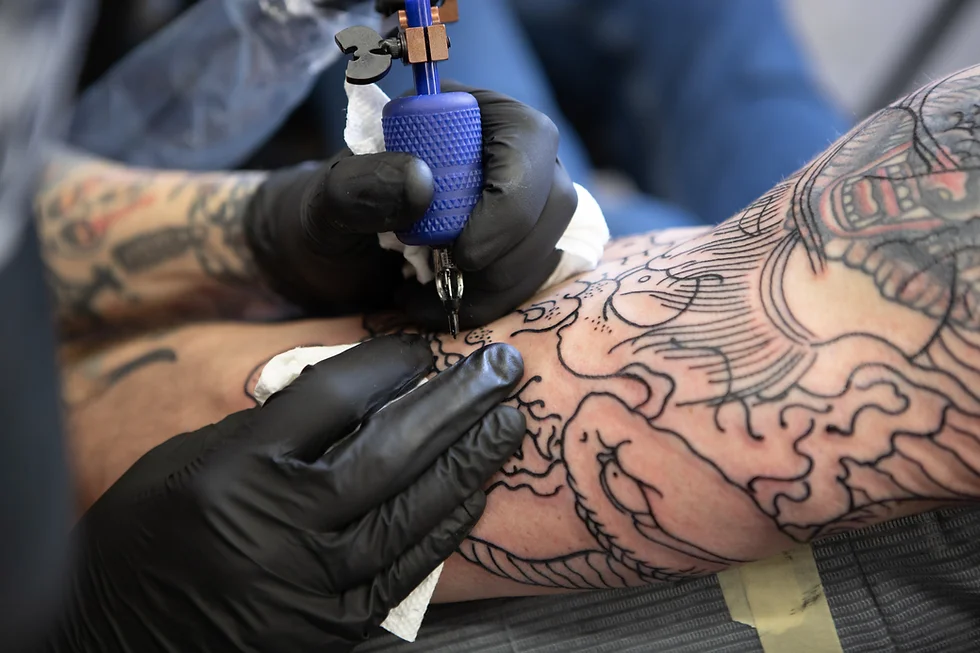
Traditional, sometimes called American or Western traditional, is known for bold outlines, clear shapes and a limited palette of saturated colours. Roses, swallows, anchors, daggers, hearts, ships and animals are among its familiar subjects.
Many classic motifs have historical associations—for example, maritime imagery can suggest travel, homecoming or life at sea—but meanings have changed across time and communities. Today, clients may choose the style for its clarity and recognisable visual character as much as for a traditional symbol.
6. Neo-Traditional and Illustrative Tattoos
Neo-traditional tattooing develops the bold structure of traditional work with a wider colour palette, more varied line weights and greater illustrative detail. Illustrative tattooing borrows from drawing, printmaking, graphic novels and contemporary art.
These styles give the artist room to create expressive characters, animals, plants and imaginative scenes. They work well for clients who want a clear subject with a distinctive artistic personality rather than a photographic result.
7. Japanese-Inspired Tattoos
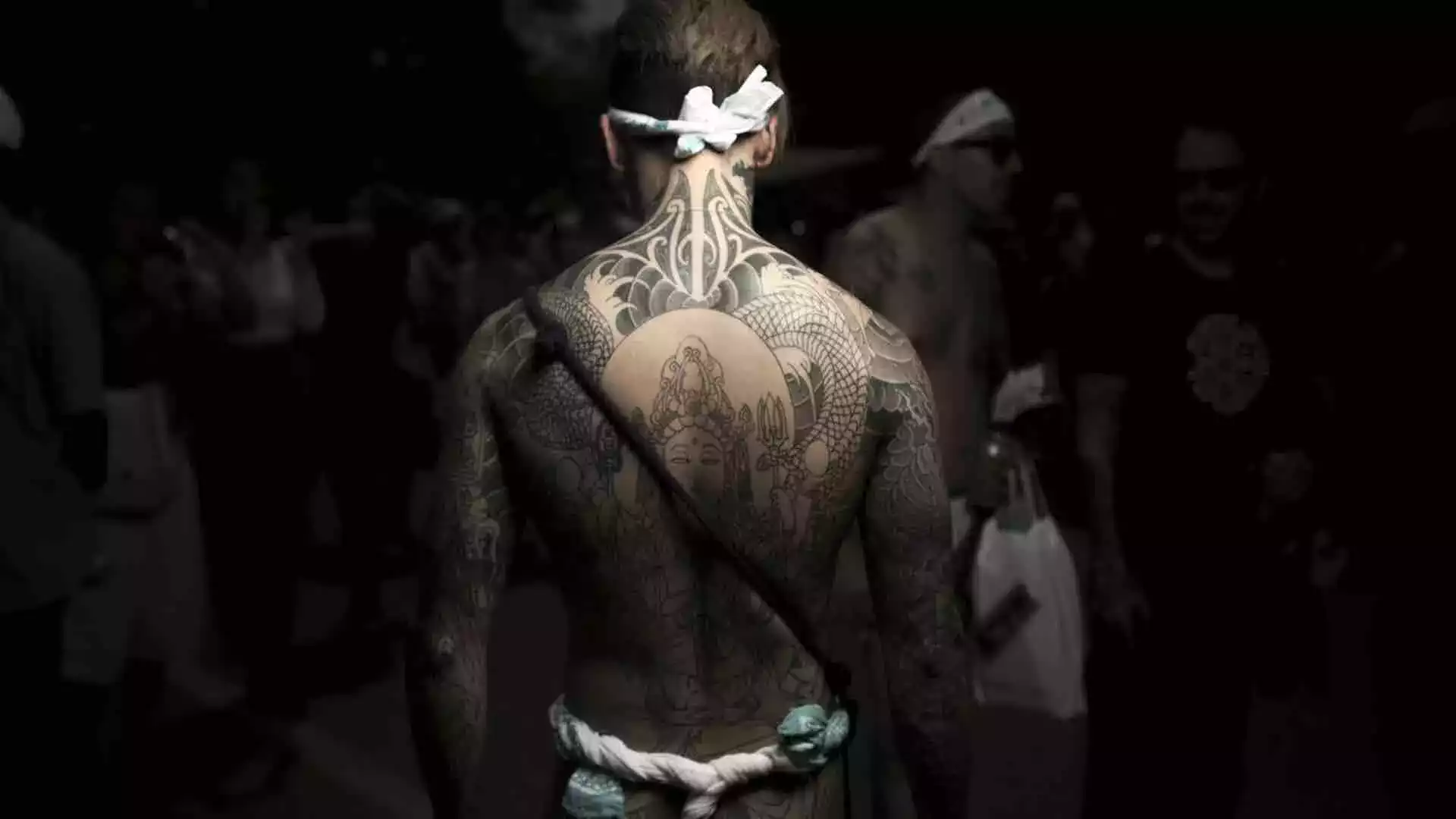
Japanese tattooing is recognised for flowing, large-scale compositions designed around the body. Dragons, koi, tigers, snakes, waves, peonies, chrysanthemums and other subjects may appear within carefully structured backgrounds.
Individual motifs can carry different associations depending on the story, pairing and cultural context. A design should therefore be planned as a complete composition rather than assembled from isolated “symbol meanings” found online. Choosing an artist with genuine knowledge of Japanese tattooing is especially important.
8. Colour and Watercolour Tattoos
Colour tattoos can range from saturated traditional work to soft illustrative shading. Watercolour-inspired tattoos imitate painted washes, brush marks and colour transitions, sometimes using black linework or stronger shapes to support the composition.
Colour choice can create mood or hold personal significance, but no colour has one meaning for everyone. Skin tone, placement, pigment choice and sun exposure can all affect how the finished tattoo appears and changes over time.
9. Abstract Tattoos
Abstract tattoos use shape, movement, texture and contrast instead of depicting a subject literally. Brush-like marks, flowing lines, fragmented forms and unusual combinations can produce a design that feels emotional or open to interpretation.
This approach is well suited to collaborative custom work because the artist can adapt the composition to the body. Reference images can communicate the mood you want without requiring an exact copy of an existing tattoo.
10. Lettering and Script Tattoos
Lettering tattoos use names, dates, quotations or individual words. Font, spacing, size and placement all influence the final character of the design. A phrase may be deeply personal, but it still needs to remain clear and readable.
Always confirm spelling, punctuation and translation before the appointment. Very small or tightly spaced text can become harder to read with time, so your artist may recommend a different size or type style.
How to Choose the Right Tattoo Style
- Start with the subject: decide what you want the tattoo to show or express.
- Choose the visual mood: delicate, bold, realistic, colourful, graphic or abstract.
- Consider placement and scale: detailed work needs enough space to remain legible.
- Review healed portfolios: find an artist experienced in the style you prefer.
- Discuss longevity: ask how line weight, spacing and colour may change over time.
- Create something original: use references for direction rather than copying another person’s tattoo.
Your Design Does Not Need a Label
Tattoo styles are useful for communication, but many strong designs combine more than one approach. A botanical subject might use fine lines and dotwork; a portrait might include abstract colour; or a geometric composition might incorporate blackwork.
At London Tattoo House in Wandsworth, we help clients refine their references, choose an appropriate scale and develop a design suited to their idea and placement. You can also explore our tattoo styles for more examples.
Ready to discuss your next tattoo? Contact London Tattoo House to arrange a consultation.