

Tattoo aftercare helps a new tattoo heal cleanly and comfortably while protecting the detail of the finished work. A fresh tattoo is also healing skin, so clean hands, gentle care and careful observation are important from the first day.
Always follow the specific instructions given by your tattoo artist. The correct routine can vary according to the size and placement of your tattoo, your skin and the type of dressing used. This guide offers general aftercare information and does not replace advice from a qualified healthcare professional.
The First Hours After Your Tattoo
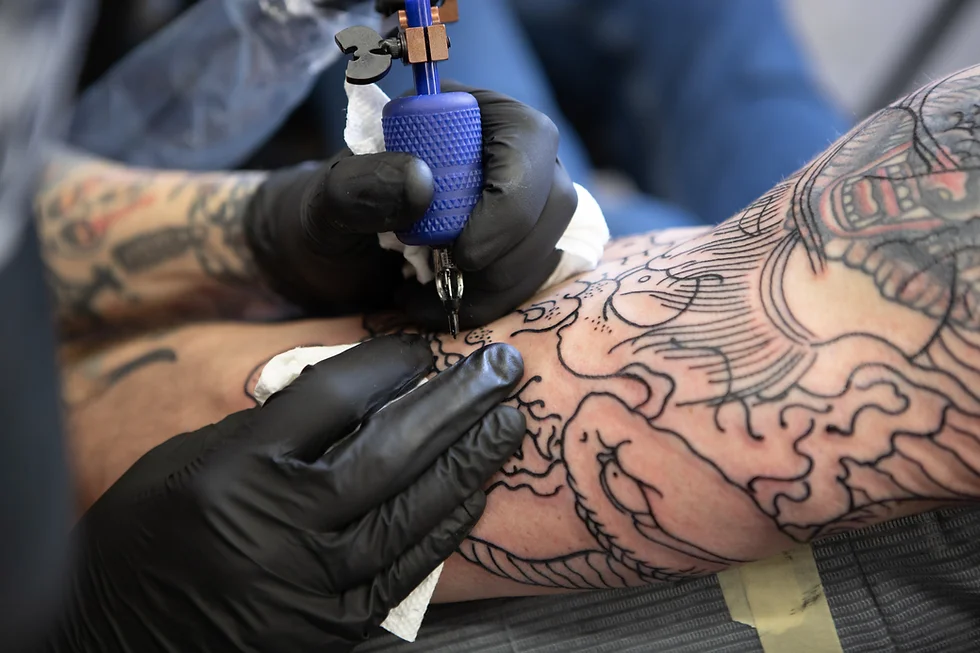
Your artist will clean the area and apply a protective dressing before you leave the studio. Some dressings are intended for short-term use, while medical adhesive films may remain in place for longer. Leave the covering on for the period your artist recommends, and do not remove it early simply to look at the tattoo.
Before touching the tattoo or its dressing, wash your hands thoroughly with warm water and liquid soap, then dry them with a clean towel or paper towel. If the dressing leaks, lifts at the edges or becomes contaminated, contact your artist for advice instead of repeatedly removing and reapplying it yourself.
How to Clean a New Tattoo
Once it is time to remove the dressing, wash your hands and gently clean the tattoo with lukewarm water and a mild, fragrance-free soap. Do not scrub the area or use a sponge, flannel or exfoliating product. Rinse carefully and pat the skin dry with clean disposable paper towel. Avoid rubbing.
A small amount of clear fluid, excess ink or light spotting can occur during the early healing stage. Mild tenderness, redness and swelling may also be expected at first, but these symptoms should improve rather than become more severe.
Moisturising Without Overdoing It
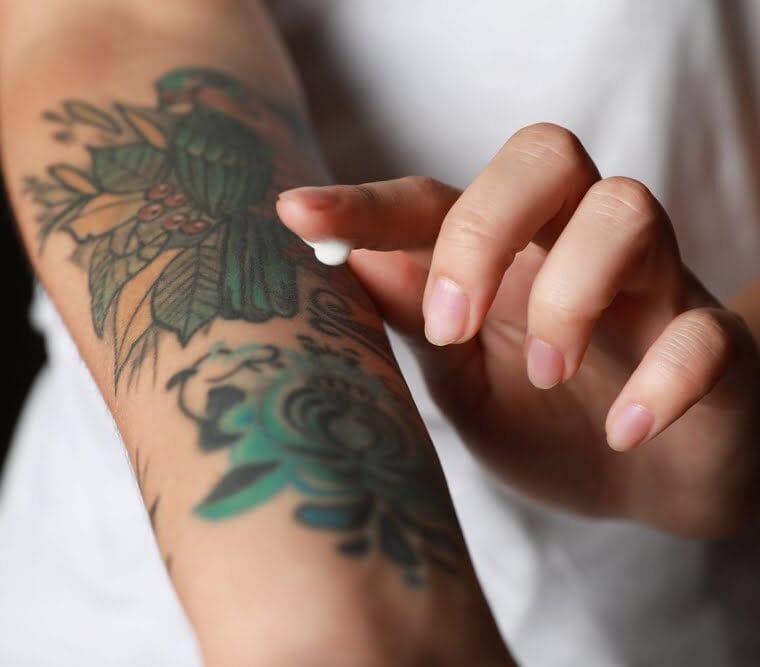
When the skin is clean and dry, apply only a thin layer of the fragrance-free aftercare product recommended by your artist. More product is not better: a heavy layer can leave the area overly moist and uncomfortable. Always wash your hands before applying anything, and do not share creams or use a contaminated container.
Do not apply antibiotic cream unless a healthcare professional has advised you to use it. If a product causes increasing irritation, stop using it and ask your artist, pharmacist, GP or NHS 111 for guidance.
What to Avoid While Your Tattoo Heals
- Do not pick or scratch. Light flaking or small scabs can be part of normal healing. Let them come away naturally.
- Avoid soaking the tattoo. Short showers are preferable to baths. Stay out of swimming pools, hot tubs, saunas and open water until the area is fully healed.
- Reduce friction. Choose clean, loose clothing that does not rub or press against the tattoo.
- Be careful with exercise. Avoid activities that create heavy friction, stretching or contamination around the tattooed area, especially during the early stage of healing.
- Keep it out of direct sunlight. Do not apply sunscreen to skin that is still open or healing. Once the tattoo is fully healed, regular broad-spectrum sun protection can help reduce fading.
- Keep the area clean. Avoid dirty surfaces, unwashed bedding and unnecessary touching by other people or pets.
Itching, Peeling and the Healing Process
As the tattoo heals, the skin may feel dry, tight or itchy and may begin to peel. This is usually part of the normal process. Do not scratch, pull at loose skin or remove scabs, because this can damage healing skin and affect the appearance of the tattoo.
Healing time differs from person to person and also depends on the size, placement and style of the tattoo. The surface may look settled before the deeper layers of skin have completely recovered, so continue to treat the area gently and follow your artist’s instructions.
Signs of a Possible Infection
Some initial redness and tenderness can be normal. However, seek medical advice if the area becomes increasingly red, swollen, hot or painful; if redness spreads beyond the tattoo; if there is yellow or green discharge, an unpleasant smell or red streaking; or if you develop a fever, chills or feel generally unwell.
Contact your GP or NHS 111 if the tattoo does not look or feel right. If symptoms are severe or rapidly worsening, seek urgent medical help. Your tattoo artist can help with routine aftercare questions, but cannot diagnose or treat an infection.
Long-Term Tattoo Care
After the skin has fully healed, regular moisturising can help it feel comfortable, while protection from strong sunlight can help preserve the appearance of the tattoo. Use a suitable broad-spectrum sunscreen on healed skin and reapply it as directed, especially during longer periods outdoors.
Even a well-healed tattoo can change over time because of sun exposure, skin ageing and natural changes in the body. Consistent skin care and sensible sun protection are the most useful long-term habits.
Aftercare Support in Wandsworth
At London Tattoo House, we explain the appropriate aftercare routine before you leave the studio and can answer routine questions during healing. If you are uncertain about your dressing or normal healing, contact us rather than guessing or using an unverified home remedy.
Good tattoo aftercare is simple: follow your artist’s instructions, wash your hands, keep the area gently clean, avoid soaking and friction, and act promptly if symptoms become worse. You can also read the current guidance from University College London Hospitals NHS Foundation Trust and the UK Health Security Agency.